Watercolor Lily Flower Patterns: A Creative Resource for Designers and Enthusiasts
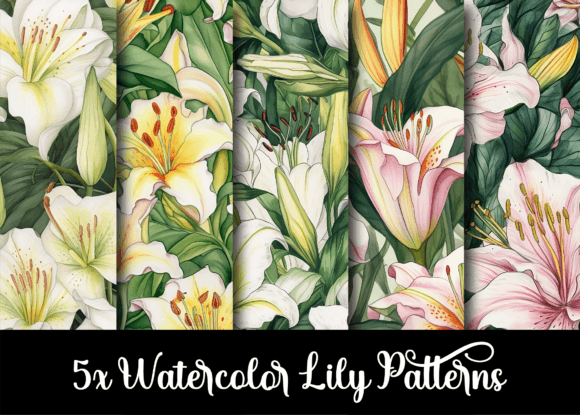
Watercolor Lily Flower Patterns are a versatile and elegant design asset that can enhance a wide range of creative projects. These patterns feature delicate lilies rendered in a soft, watercolor style, surrounded by lush green leaves. The result is a visually appealing and sophisticated design that brings a touch of nature into any project. Whether you're working on home decor, fashion, branding, or stationery, these patterns offer a refined aesthetic that complements many styles.
For designers and creators, the integration of Watercolor Lily Flower Patterns into a workflow can streamline the process of developing visual elements. These patterns are not just decorative—they serve as a foundation for building cohesive designs. Their versatility allows them to be adapted to various mediums, from digital graphics to physical products, making them an essential tool in a designer’s toolkit.
One of the key benefits of using Watercolor Lily Flower Patterns is their adaptability. They can be applied at different stages of a project—before, during, or after—to support creative decisions and enhance outcomes. For instance, during the initial planning phase, these patterns can help establish a color palette and design direction. In the execution phase, they can be used to create mockups or sample visuals. And in the final stages, they can be incorporated into finished products to add a finishing touch.
The use of Watercolor Lily Flower Patterns also aligns well with other design tools and platforms. Many graphic design software applications allow users to import and customize patterns, making it easy to integrate these designs into larger projects. Additionally, these patterns can be paired with other design elements such as typography, textures, and color schemes to create a more dynamic and layered composition.
When considering the practical implementation of Watercolor Lily Flower Patterns, it's important to think about preparation and organization. Having a collection of high-quality patterns ensures that designers have access to a variety of options, which can save time and effort in the long run. It's also helpful to categorize patterns based on their application, such as home decor, fashion, or branding, to make them easier to locate and use when needed.
Watercolor Lily Flower Patterns are particularly useful for those who work on multiple projects simultaneously. Their consistent style and aesthetic appeal make them a reliable choice for maintaining brand identity across different materials. For example, a small business owner might use these patterns in both their website design and printed marketing materials to ensure a cohesive look and feel.
In addition to their visual appeal, these patterns contribute to the overall quality and professionalism of a project. The attention to detail in the watercolor style adds a level of sophistication that can elevate the final product. This is especially valuable in industries where aesthetics play a significant role, such as fashion and interior design.
Another advantage of using Watercolor Lily Flower Patterns is their ease of customization. While they come pre-designed, they can be modified to suit specific needs. This flexibility allows designers to experiment with different layouts, color variations, and scale adjustments without starting from scratch. It also makes them ideal for personal or small-scale projects where a unique touch is desired.
For hobbyists and enthusiasts, Watercolor Lily Flower Patterns offer an opportunity to explore creativity in a structured way. Whether creating custom invitations, designing greeting cards, or crafting home decor items, these patterns provide a starting point that can be further developed and personalized. This encourages experimentation and helps foster a deeper connection with the creative process.
From a practical standpoint, the use of Watercolor Lily Flower Patterns should be considered within the broader context of workflow efficiency. By incorporating these patterns early in the design process, creators can avoid unnecessary revisions and streamline the development of visual elements. This approach not only saves time but also enhances the overall quality of the final output.
It's also worth noting that the availability of high-resolution files, such as JPG 2048x2048px, ensures that these patterns can be used in a variety of formats and sizes without compromising quality. This makes them suitable for both digital and print applications, expanding their potential uses even further.
Ultimately, Watercolor Lily Flower Patterns are more than just decorative elements—they are a valuable resource that supports creativity, efficiency, and consistency in design workflows. Whether you're a professional designer or a passionate hobbyist, these patterns can help bring your ideas to life with elegance and style.
By integrating Watercolor Lily Flower Patterns into your creative routine, you open up new possibilities for expression and innovation. Their timeless appeal and adaptability make them a worthwhile addition to any design library. With careful planning and thoughtful implementation, these patterns can become a trusted part of your workflow, helping you achieve stunning results with greater ease and confidence.